

CNF, which has been supporting the implementation of SMART patrolling across Georgia’s protected areas at the system level for several years already, is now advancing its efforts toward further development with SMART Survey. This tool will strengthen biodiversity monitoring by enabling rangers to collect systematic, high-quality data on species and habitats.
The introduction of SMART Survey represents a logical and organic continuation of CNF’s long-term efforts to establish a structured biodiversity monitoring system in Georgia. While expert-based monitoring currently provides high-level scientific assessments of priority species and habitats, the integration of SMART Survey will introduce a second tier of monitoring that is ranger-led, field based, regular and operational. Expert teams will continue to design the survey methodology and guide analysis, while rangers will carry out data collection in the field, making monitoring more continuous, cost-efficient and rooted within protected areas.
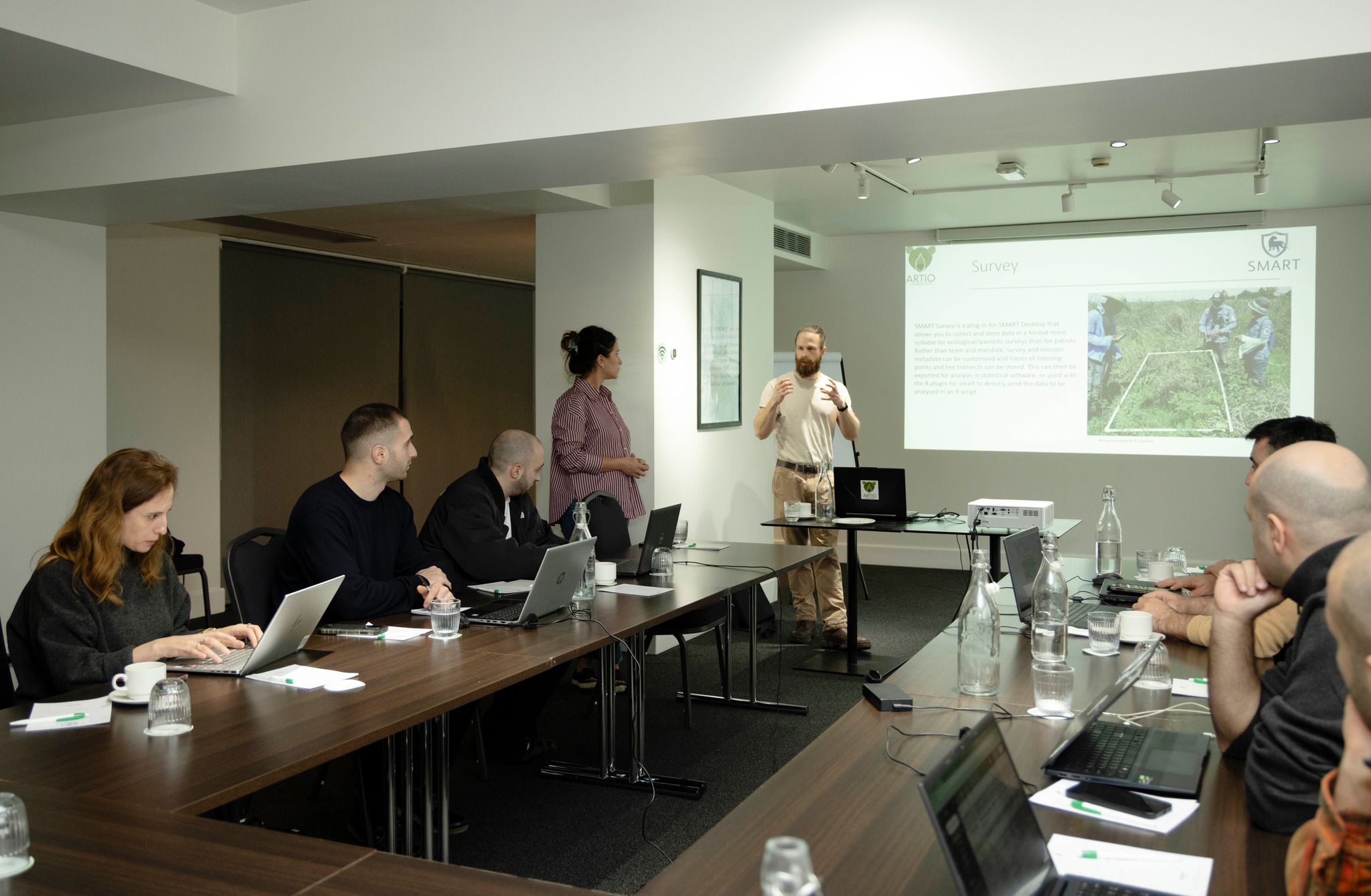
On December 8–9, CNF organized a productive training on piloting SMART Survey in Machakhela National Park. The training brought together practitioners from Machakhela PA, the Agency of Protected Areas, and the Ministry of Environment Protection and Agriculture’s Biodiversity Policy Department. Besides developing the technical skills in working with SMART software, the training was highly effective in developing the SMART Survey data model and monitoring design. The process also benefited from the expertise from Nacres, one of the leading conservation organizations in Georgia whose representative contributed to shaping the survey methodology and ensuring its relevance to local conservation priorities.
SMART Survey equips rangers with a structured approach to gather reliable biodiversity information, supporting evidence-based decision-making, adaptive management and improved conservation outcomes.
The primary goal of this initiative is to pilot SMART Survey in Machakhela PA. Following successful implementation of the pilot phase, the approach is expected to be scaled up and deployed across Georgia’s protected area network, strengthening biodiversity monitoring nationwide.


